

present:


Earn up to 8 continuing education hours while learning, connecting and gaining practical insights from experts in the field.

Psychosis Care and Connection:
A Retreat on Humanistic Approaches
October 2-4, 2026 | Santa Barbara, California
Join us for the inaugural West Coast Psychosis Care and Connection Roundtable Retreat, a community-centered gathering dedicated to reimagining how we understand and support people experiencing psychosis.
Building on the success of our East Coast retreat in the Berkshire Mountains, this West Coast gathering brings together clinicians, researchers, advocates, program leaders, and individuals with lived experience for two days of shared learning, reflection, and relationship-building.



Hosted by Ellenhorn, Windhorse Integrative Mental Health & The Monarch Community
Join us for the inaugural West Coast Psychosis Care and Connection Roundtable Retreat in Santa Barbara, a community-centered gathering dedicated to reimagining how we understand and support people experiencing psychosis.
Building on the success of our East Coast retreat in the Berkshire Mountains, this West Coast gathering brings together clinicians, researchers, advocates, program leaders, and individuals with lived experience for two days of shared learning, reflection, and relationship-building. Together, we will explore more humanistic, person-centered approaches to psychosis care, across both community and residential settings.
Through dialogue, storytelling, and collaborative inquiry, participants will examine how we can move beyond fragmented systems toward care that restores purpose, identity, dignity, and belonging. The retreat is designed to foster deep connection and practical insight through a blend of small-group discussions, experiential learning, and informal community-building.
Set within a restorative California landscape, this retreat continues a growing national movement committed to treating psychosis not just as a clinical condition, but as a human experience that unfolds within relationships and communities.
We invite you to be part of this evolving West Coast community of care, grounded in connection, curiosity, and compassion, as we imagine new pathways for supporting people living with psychosis.
Esteemed Presenters and Abstracts


Negative Symptoms or a Problem of Depleted Social Buffers and Disappearing Psychosocial Resources: A Social Psychological Approach to the "Negative Signs of Schizophrenia"
CEO and Founder, Ellenhorn
This presentation will explore the pivotal role of social buffers in motivating individuals within their social environments. By addressing the absence of these buffers alongside the "fear of hope," it offers a profound understanding of the negative symptoms associated with schizophrenia. Through critical analysis, it evaluates how conventional treatment approaches may inadvertently exacerbate symptoms, potentially contributing to iatrogenic outcomes where medical interventions foster illness. By scrutinizing these dynamics, the presentation aims to prompt thoughtful reflection and discourse among attendees, fostering a deeper understanding of the complexities involved in schizophrenia treatment. It advocates for reevaluation of prevailing paradigms, emphasizing the need for more empathetic and nuanced approaches to address the challenges posed by schizophrenia and related conditions.

"Consciousness and Waking Dream Practice: An Intensive Psychotherapeutic Approach to Working with Psychosis"
Executive Director, Windhorse Integrative Mental Health
Clinical Director, Windhorse Integrative Mental Health
The study and treatment of psychosis have long been marked by clinical complexity, theoretical debate, and evolving paradigms of care. While biological and pharmacological approaches have dominated much of the discourse over the past century, the role of psychotherapy in treating psychosis has historically received comparatively limited attention. However, a growing body of clinical scholarship supports the therapeutic potential of relational and psychodynamically informed approaches.Early pioneers of psychotherapy for psychosis, including Harold Searles and Frieda Fromm-Reichmann, emphasized the centrality of attunement, sustained presence, co-regulation, and relational engagement in working with altered states of consciousness. Their work suggests that the mental operations characteristic of psychotic experience share meaningful similarities with dream processes, including symbolic condensation, affective intensification, and shifts in ego boundaries.
This presentation explores psychosis as a form of waking dream state and examines how psychotherapy can facilitate the co-creation and exploration of these altered states of consciousness within the therapeutic relationship. By approaching psychotic phenomena as meaningful experiential processes rather than solely as symptoms to be eliminated, clinicians may gain deeper access to the subjective logic organizing the experience.


"Non-Traditional Approaches to Treating Psychosis"
In this session, William explores how working with psychosis requires more than simply focusing on symptoms or diagnosis. Working with psychosis requires more than simply focusing on symptoms or diagnosis. The experience can be confusing, frightening, and isolating for both the person going through it and the family members trying to support them. My approach to treatment is grounded in being client-centered, relational, authentic, and flexible, with the goal of creating a space where people feel safe enough to be honest about what they are experiencing without feeling judged or dismissed.
My approach is also somewhat non-traditional in that it values flexibility over rigid structure. I focus not only on reducing distressing symptoms but also on helping clients reconnect with their sense of identity, meaning, and personal strengths. Sometimes this means exploring the emotional or symbolic meaning behind experiences, while other times it means focusing on practical ways to feel safer and more grounded in daily life.
Ultimately, I see treatment as a collaborative process. By prioritizing connection, respect, and openness, clients and families can move from feeling overwhelmed and alone toward feeling understood, supported, and hopeful about recovery.

"Voices"
Professor of Anthropology, Stanford University
Voices are often a highly distressing symptom of the condition schizophrenia. Many clinicians presume that the experience of the symptoms is more or less the same everywhere. The talk will present an interview based comparison of the voice-hearing experience among persons with schizophrenia in six different countries: the US, Ghana, India, Thailand, China and Russia. The comparison is of necessity limited, because the sample sizes are small. Nevertheless we see differences which may be of interest. Most strikingly, the participants in the US sample reported more violent commands, and it seems that their voices felt more alien to them.
This work also draws on data from extensive fieldwork and from hundreds of interviews conducted across multiple countries to examine the prevalence and variability of these experiences. I will discuss what we know about the difference between the voices found in psychosis and in the general population, and the evidence that three factors (porosity, absorption and training) facilitate voices in the general population. People can in effect learn to hear voices—and this is terribly important in religious settings. This learning dimension has implications for the clinical management of psychosis as well.


"Metamorphosis of the Self During Recovery from Psychosis"
Executive Clinical Director, The Monarch Community and Houston Methodist Hospital
Our Our collective consciousness is directed to the most salient aspects of suffering in humans-a broken arm evokes immediate empathy and visceral sympathetic response. This holds true for psychosis as well—positive symptoms such as hallucinations, delusions, referential thinking, thought broadcasting, and other Schneiderian first rank symptoms (Schneider, 1959) are the mind’s equivalent of a broken arm. And while difficult for the non-psychotic mind to grasp, they are “visible” and can evoke empathy and curiosity in the compassionate and caring.
But what of the invisible breaks of a fragmenting sense of self as psychosis sets in? Where, when, and how we bear witness to the broken sense of self? How do we help our companion grieve what is lost and help them discover something new? We have more questions than answers, and yet we are not helpless. We are with hope, skill, compassion, and resources to aid in the metamorphosis. Leaning on literature, film, and clinical encounters, we will identify the signs of a fragmenting self, creatively engage our companion in restoring a sense of self, and recognize the healthy metamorphosis that is central to social recovery. My companion and I have developed a language for the experiences of a fragmented sense of self and have worked together on recovery bits of their energy, strength, confidence. Of equal or greater importance, my companion has bonded with others, rediscovered lost skills, interests, and passions that come from being immersed in a community of others suffering in their own ways. This is far from a complete story, and yet it provides a reminder to us all that the path to a metamorphosis of self does not have to follow that of Gregor Samsa in Kafka’s Metamorphosis.
"Harnessing Compassion in Working with Individuals Experiencing Psychosis"
Clinical Professor, Stanford University
Although existing psychological interventions for distressing voices and beliefs can be beneficial, many individuals experience ongoing difficulties, highlighting the need for innovative approaches that directly target embodied threat processes and relational dynamics. Experiencing distressing voices or distressing beliefs is associated with heightened threat responses, shame, and maladaptive patterns of fear, submission, and conflict that contribute to psychological distress and functional impairment. Compassion Focused Therapy (CFT) offers a framework for cultivating physiological safeness and compassionate motivation before engaging with threatening stimuli.
This presentation will describe the theoretical framework for Compassion Focused Therapy, provide examples of CFT techniques applicable at the different stages of therapy intervention, and will introduce a novel nine-session intervention integrating CFT with Virtual Reality for individuals who experience distressing voices. The intervention is delivered in three phases: (1) activating safeness physiology, (2) developing self-compassionate relating, and (3) compassionately engaging with voice-hearing conflicts and associated threats. Therapist led VR-assisted exercises are combined with imagery and reflective practices to support embodied compassion and graded engagement with distress. The intervention is designed for outpatient clinical and research settings and for adults experiencing ongoing voice-related distress.

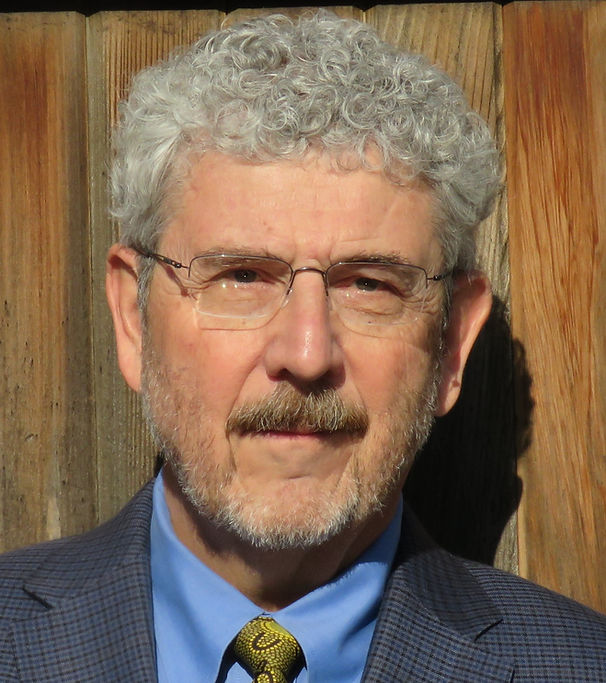

"Threading the Needle: From Clinical High Risk for Psychosis to Chronic and Idiopathic Psychosis; Assessment, Re-Assessment and Treatment"
Therapist, Screener, Benton County EASA
Assertive Community Treatment, first developed in 1980 as an answer to chronic ineffective hospitalization for people experiencing psychosis and has been revised nationally and internationally, prominently reborn in Australia with early intervention for psychosis, and returning to the United States in the early 2000s. There is clear and convincing evidence of the efficacy and life changing outcomes for these programs, however little examination of case study of when and how specialty integrated cross disciplinary teams reach limitations and poor outcomes in treating psychosis. This presentation will focus on the nature of psychosis, contrasting a clinical lens with lived experience affirming individual and family experience. Attending to effective early assessment and re-assessment for people experiencing chronic and idiopathic psychosis, as well as novel treatment from emerging understanding of what our brains and minds are doing when we are sleeping, this presentation will examine the gap between the medical model of psychosis and demolition psychiatry. The pitfalls and benefits of differential diagnosis as well as the need for understanding the relationship between physiology and mind will be central.
"Dangerous Gifts: Rethinking Psychosis as Signal, Sensitivity, and Systemic Distress"
Mental Health Trainer, Writer, Community Organizer; Co-Founder, Icarus Project
The presentation also explores how contemporary frameworks like Internal Family Systems offer practical tools for engaging intense beliefs, voices, and visionary experiences with curiosity rather than confrontation. From this perspective, experiences often labeled “delusional” may be understood as protective parts of the psyche attempting to create coherence in the face of overwhelming emotional and relational pressure.
Drawing from personal story, clinical collaboration, and community-based mental health work, I introduce what I call a Copernican shift in psychosis care: moving the center of the conversation away from the idea of a “broken brain” and toward the complex systems—families, institutions, cultures, and histories—in which crisis unfolds.
Seen this way, psychosis can sometimes be understood not only as breakdown, but as a signal from the edges of the system—a dangerous gift pointing toward truths that individuals and communities may not yet know how to hold.
Participants will leave with new ways of thinking about psychosis that integrate lived experience, relational approaches, and clinical insight—while asking how our care systems might evolve to meet people in crisis with more curiosity, humanity, and possibility.
